
I've been scammed
If you've been scammed, act fast to limit further losses. Contact your bank, file a police report, secure your accounts and report to platform administrators.
Last updated on 3 June 2026
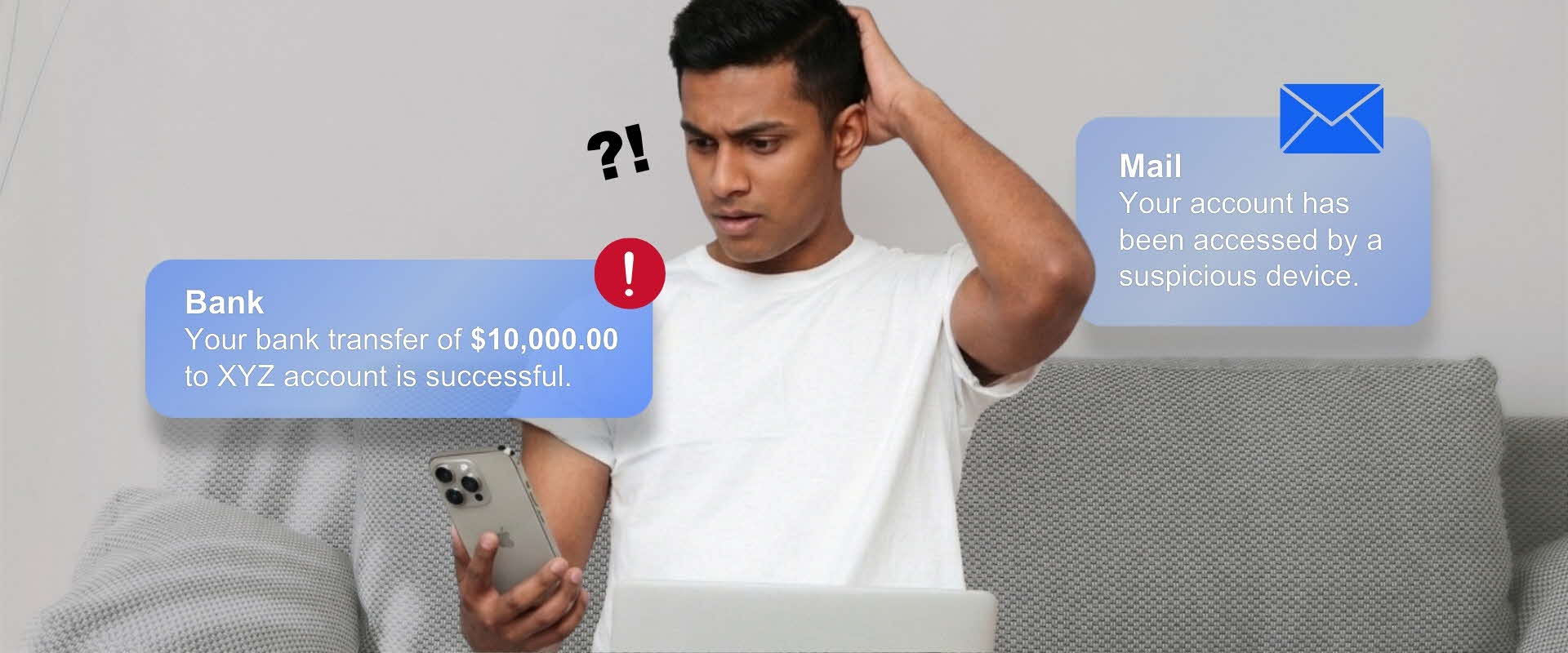
Take these 4 steps to limit further losses
Suffered a monetary loss or had your personal information compromised? Here's what to do next to prevent further losses and help prevent other victims from being scammed.
1. Contact your bank immediately
If your bank account or credit card has been compromised, the bank can take immediate actions to prevent further monetary loss.
2. File a police report
You may file a police report online or in person at the nearest Neighbourhood Police Centre or Neighbourhood Police Post.
For urgent assistance, call 999. To report scams, you may share information with the Police via the Police Hotline at 1800-255-0000 or online through the I-Witness e-Service (opens in new tab).
3. Inform contacts and secure accounts
If your online account (e.g. email or social media) is compromised, inform all your contacts and report the incident to the relevant email service provider or social media platform. If you still have access to your account, change your password immediately and enable two-factor or multi-factor authentication if you haven't already.
4. Report to platform administrators
For e-commerce related scams, besides filing a police report, report the incident to the platform administrators so they can act swiftly against the fraudulent seller. When filing the police report, include as much information as possible, such as the scammer’s WhatsApp number and account details, along with information and screenshots of the fraudulent social media posts or advertisements.
Remain vigilant against repeated advances from scammers. Some may exploit their victims' vulnerabilities by impersonating authorities in an attempt to scam them again.
Require more assistance?
Installed a malicious app
You have accidentally installed a malicious app.
What to do next?
Details when you file a Police Report
What to provide when you file a Police Report in person or online.
Find out more
Seek emotional support
Experiencing a scam can be distressing. Seek support from family and friends by sharing your experiences. If you require more support during the investigation process, we have a range of support options available for you.
Find out more
Anti-Scam Resource Guide
Download the Anti-Scam Resource Guide for information on the investigation process for scam cases and resources available to support you.
Download now
Frequently asked questions
I was a victim of an online scam and was cheated of my money. Will the Police be able to recover my money?
A typical modus operandi by scam syndicates is to move the scammed monies quickly between multiple bank accounts, including to overseas bank accounts. If the money is transferred overseas, fund recovery can be challenging as different jurisdictions have different recovery process and legislation. The chance of recovery once the funds have been transferred out of Singapore is very low, and it is likely that the money may no longer be recoverable.
Why is it so challenging for the Police to recover my money if it has been transferred out of Singapore?
Overseas accounts reside outside of Singapore’s jurisdiction and the Singapore Police Force will not be able to exercise any legal powers to freeze or seize the account or compel a foreign-based bank to reverse the transactions.
In such cases, the Police can only notify its foreign counterparts of the incident and seek their assistance to investigate the matter. It also depends on the laws of the foreign country and the internal business policies of the foreign banks involved. The chance of recovery once the funds have been transferred out of Singapore is very low, and it is likely that the money may no longer be recoverable.
How long does the Police take to return my money if it is recovered?
The Police will only be able to return any seized monies to victims upon the conclusion of investigations. The amount of time it takes to complete investigations, and correspondingly, the amount of time it takes for seized monies to be returned to the victims, depends on many different factors and differs across the various types of scams. For example, whether there are multiple claimants and whether the monies are still relevant for the purposes of investigation or court trial or other court proceedings.