
Insurance Service Scams
Learn how insurance service scams target victims, the red flags to look out for, and simple actions you can take to avoid financial loss and protect your information.
Last updated 28 May 2026
Key takeaways
Legitimate insurers and government officials will never ask you to transfer money or your personal information over unsolicited calls or messages.
Verify directly with the insurer or contact your advisors for assistance.
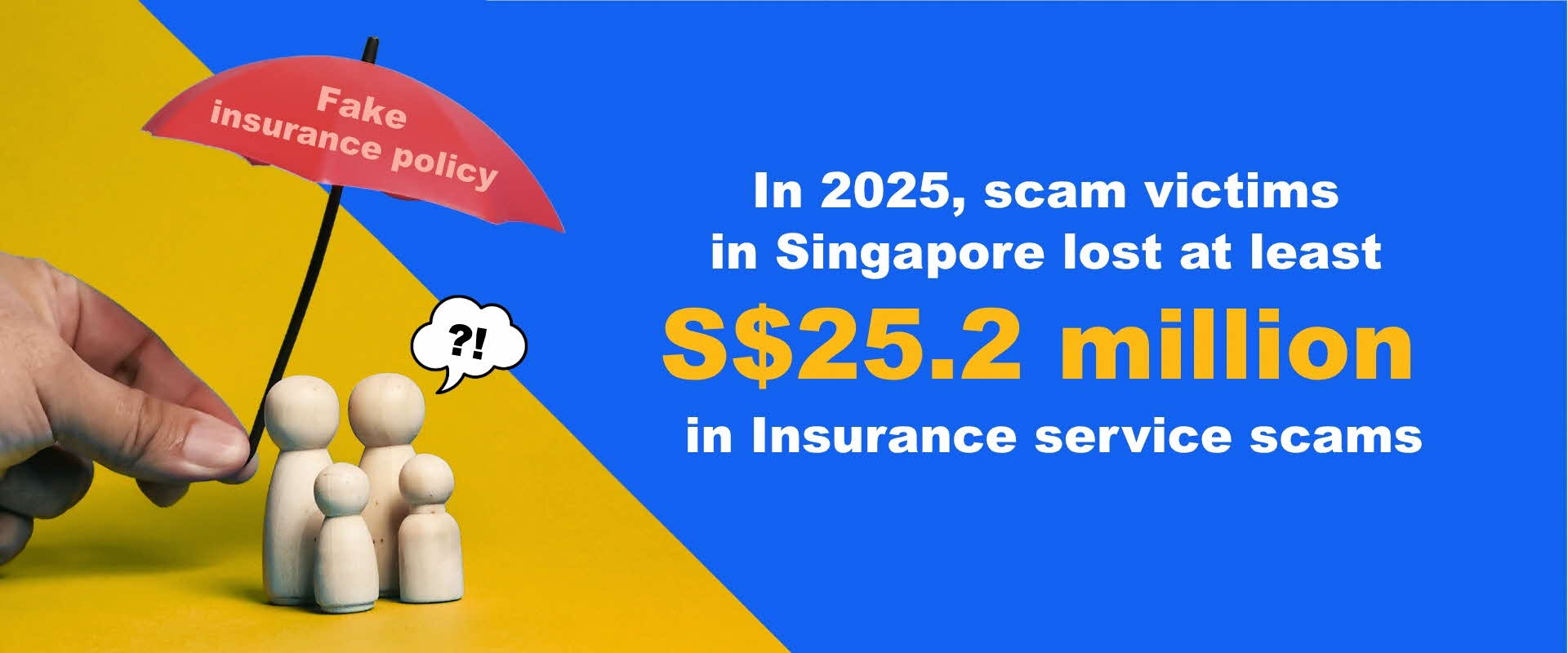
Annual Scams and Cybercrime Brief 2025
How it works?
An insurance service scam occurs when scammers impersonate representatives from insurance companies or related organisations and contact individuals with false claims about insurance policies.
Unsolicited contact
Victims would receive unsolicited calls or WhatsApp messages about an “insurance policy”.
False claims
Scammers create urgency by claiming the policy requires immediate payment, renewal, cancellation, or verification.Request for payment or personal details
Victims are asked to transfer money or provide personal information to “resolve” the issue, often with promises of refunds or adjustments.
Involving Government Officials Impersonation
In some cases, victims are redirected to scammers posing as officers from the Monetary Authority of Singapore (MAS).
Victims may be told their policies requires an MAS officer to assist in the cancellation.
In other variants, scammers (impersonating government officials) may also allege that victims’ bank accounts are being implicated in money laundering activities or that their personal information had been compromised.
Victims are pressured to transfer monies to "safety accounts” or hand over valuables such as cash or gold to assist in investigations.
They may also be guided to perform banking transactions through the WhatsApp’s screen-sharing function, thereby exposing their bank account details.
How to spot the red flags?

Unsolicited contacts
You receive unsolicited calls or messages about unknown insurance policies requiring urgent action.

Requests for urgent payment
You are asked to transfer money to renew/cancel a policy or verify your identity.
Requests for personal data or access to your device
You are told to provide banking details, one-time passwords or grant remote access to your device.
How to stay safe?
ADD:
ScamShield app to block scam calls and filter scam SMSes.
Money Lock to your bank accounts to further secure a portion of your savings.
Security features such as 2 or multi-FA for your online accounts
CHECK:
With someone you trust about the situation.
Call the 24/7 ScamShield Helpline (1799) to check if you are unsure.
Never disclose your personal information (including Singpass and CPF-related), internet banking and social media account details, and one-time passwords (OTPs) to anyone.
TELL:
Warn friends and family about this scam encounter.
Report and block suspected scam accounts/chat groups.
Call your bank immediately and make a police report if you think you have fallen victim.
Encountered this scam? Here’s what to do
If you have transferred money to a scammer, please visit this page for a list of immediate actions: I've Been Scammed!
Help keep the community safe by reporting any instances of this scam you’ve seen or experienced with the ScamShield App.