
E-Commerce Scams Situation Report (ESSR) 1H 2026
24 August 2026
E-commerce scams rose 19.3% in 1H 2026 to 3,865 cases, with total losses reaching S$8.3 million. Pokémon trading card scams were the standout trend, more than doubling to 605 cases and S$1.2 million in losses, largely driven by pre-order scams where victims paid upfront for items that never arrived. Facebook recorded the highest losses at S$2.7 million, while Carousell had the most cases.
What is the E-commerce Scam Situation Report?
The E-commerce Scam Situation Report (ESSR) replaces the E-commerce Marketplace Transaction Safety Ratings (TSR) and provides a more comprehensive view of e-commerce scam risks to better support informed decision-making by members of the public. While the TSR primarily focused on the presence of safety features across e-commerce platforms, the ESSR expands this by providing an overview of the e-commerce scam situation and ranks the top 10 platforms according to reported e-commerce scam losses and cases. This enables members of the public to better assess potential risks and exercise greater caution when transacting on higher-risk platforms.
E-commerce scam situation in 1H 2026
E-commerce scams saw an increase in the number of cases reported in the first half of 2026, by 19.3% to 3,865 cases, from 3,240 cases in the first half of 2025. The total amount lost to e-commerce scams also increased, by 18.9% to about S$8.3 million in the first half of 2026, from S$7.0 million during the same period last year.
The majority of e-commerce scam victims were aged 30 to 49, making up 41.3% of victims for this scam type. The most common platforms which scammers used to contact e-commerce scam victims were Carousell and Telegram.
E-commerce scams typically involve the sale of goods and services without physical meet-ups. Generally, victims would come across attractive deals on online marketplaces or social media platforms but would fail to receive the goods or services after making payment. In some cases, the victims could also be sellers who did not receive payment after delivering the goods or services to scammers pretending to be buyers. The scammers sometimes provided victims with fake screenshots as "proof of payment".
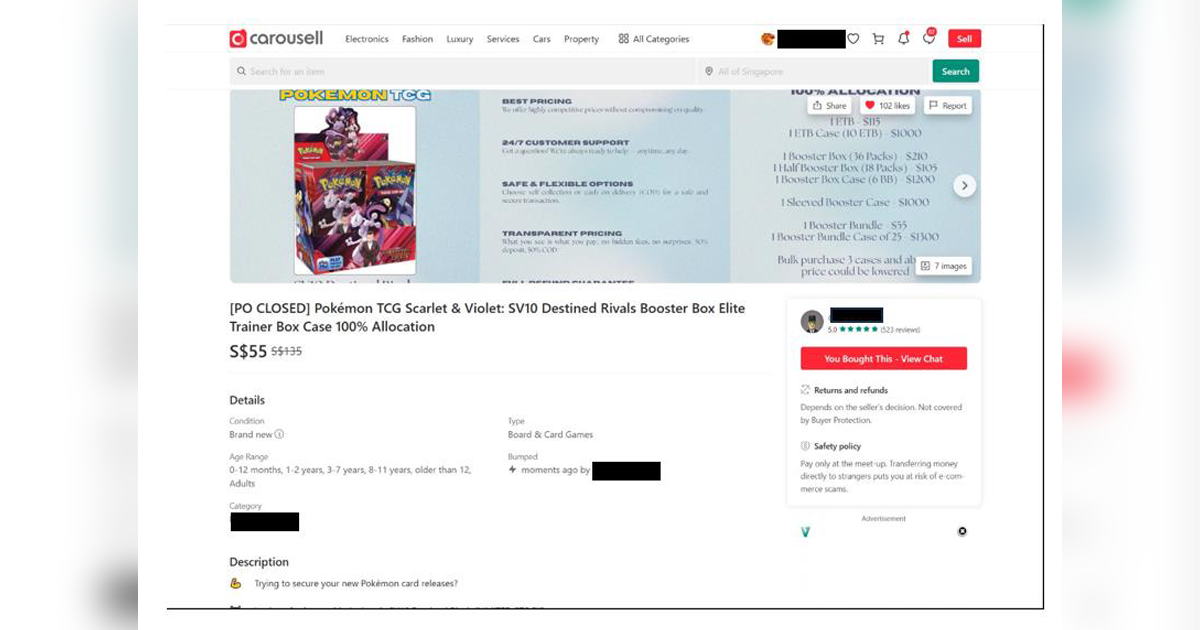
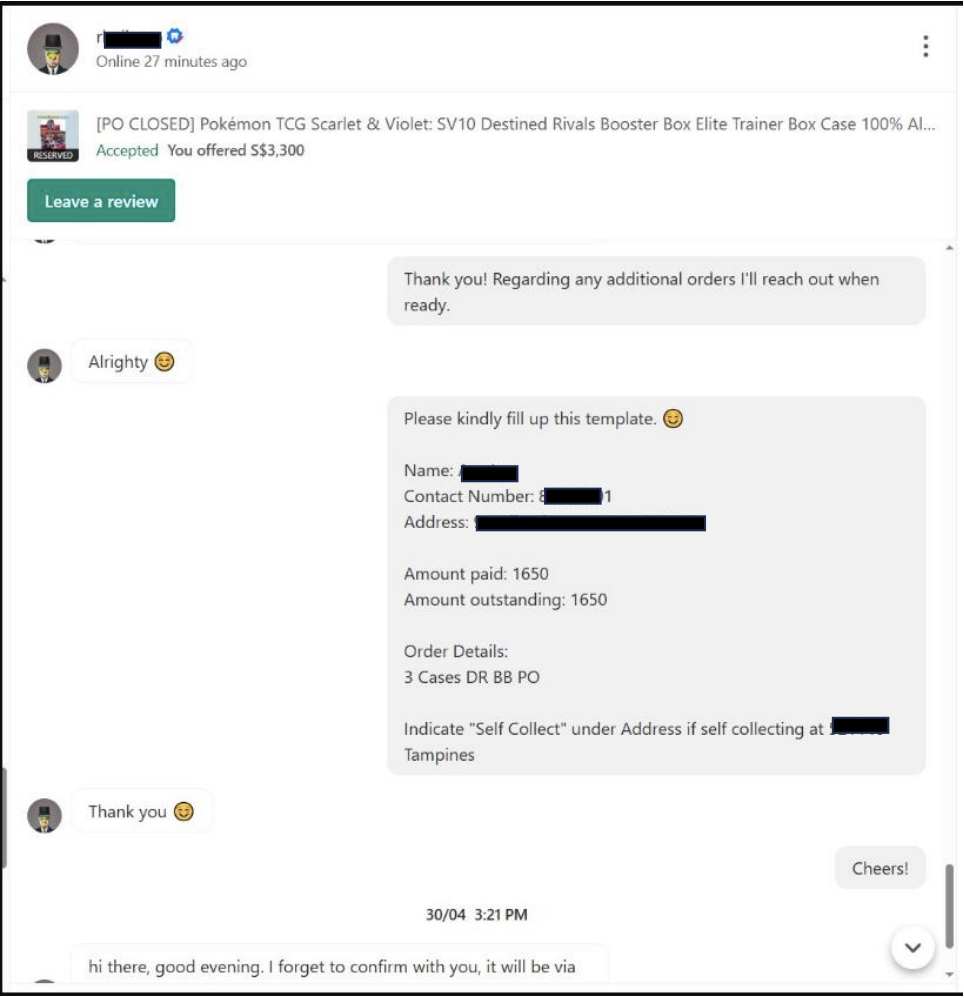
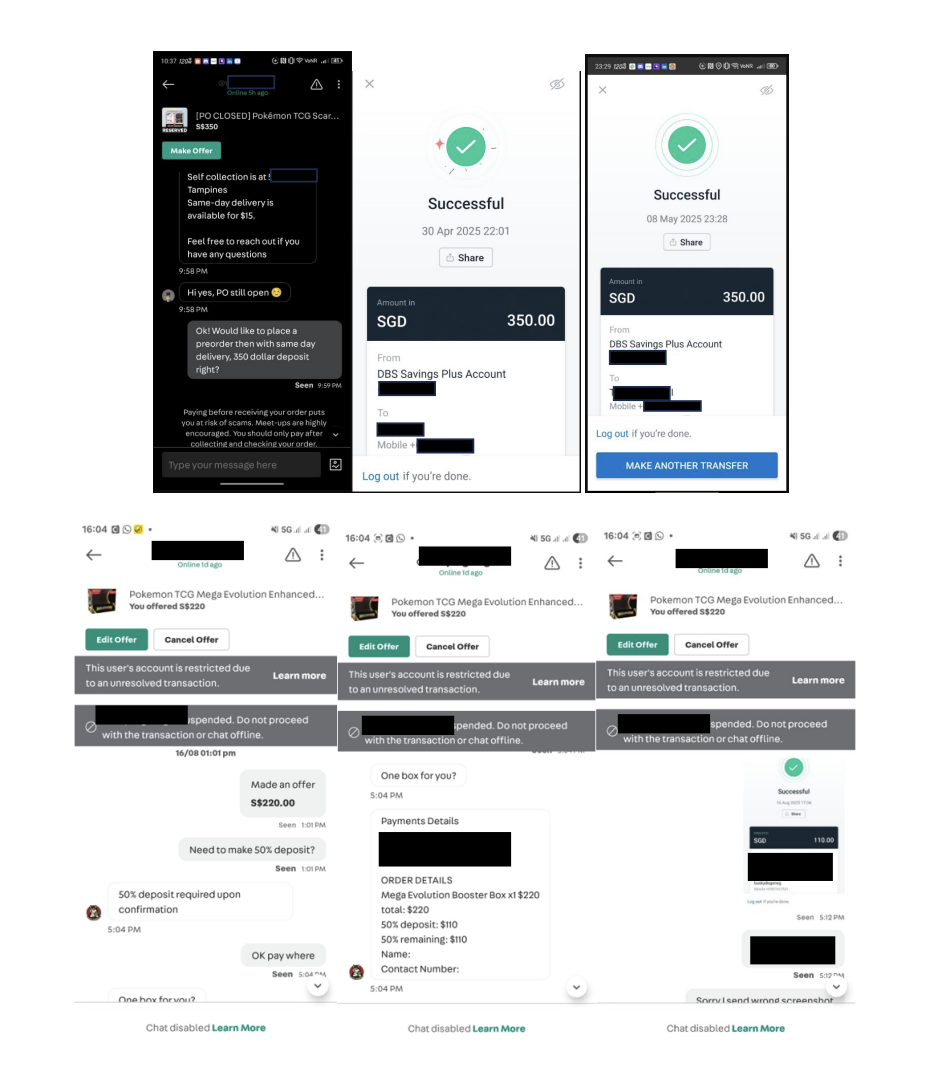
Pokémon trading cards were the top item involved in e-commerce scams in the first half of 2026, with related cases more than doubling from 279 cases in the first half of 2025 to 605 cases in the first half of 2026 (an increase of 116.8%), accounting for 15.7% of total e-commerce scam cases. Total losses from this category also surged by 172.4%, from about S$472,000 in the first half of 2025 to about S$1.2 million in the first half of 2026. This increase was largely driven by the rise of the pre-order MO.
The pre-order MO usually involves popular collectibles and fan merchandise. Victims came across advertisements for popular merchandise such as Pokémon trading cards or K-pop merchandise (e.g., lightsticks) on online platforms such as Carousell. To secure the item, scammers persuaded victims to transfer monies as a "deposit" or full payment, with the promised date of delivery usually months away. Victims only realised that they had been scammed when they failed to receive the items by the promised date, or when they came across online posts from other buyers who had been scammed by the same seller.
Top 10 Platforms in 1H 2026
Facebook recorded the highest aggregate loss at about S$2.7 million and Carousell saw the highest number of cases, with about S$1.0 million lost.— Mid-Year Scam and Cybercrime Brief 2026

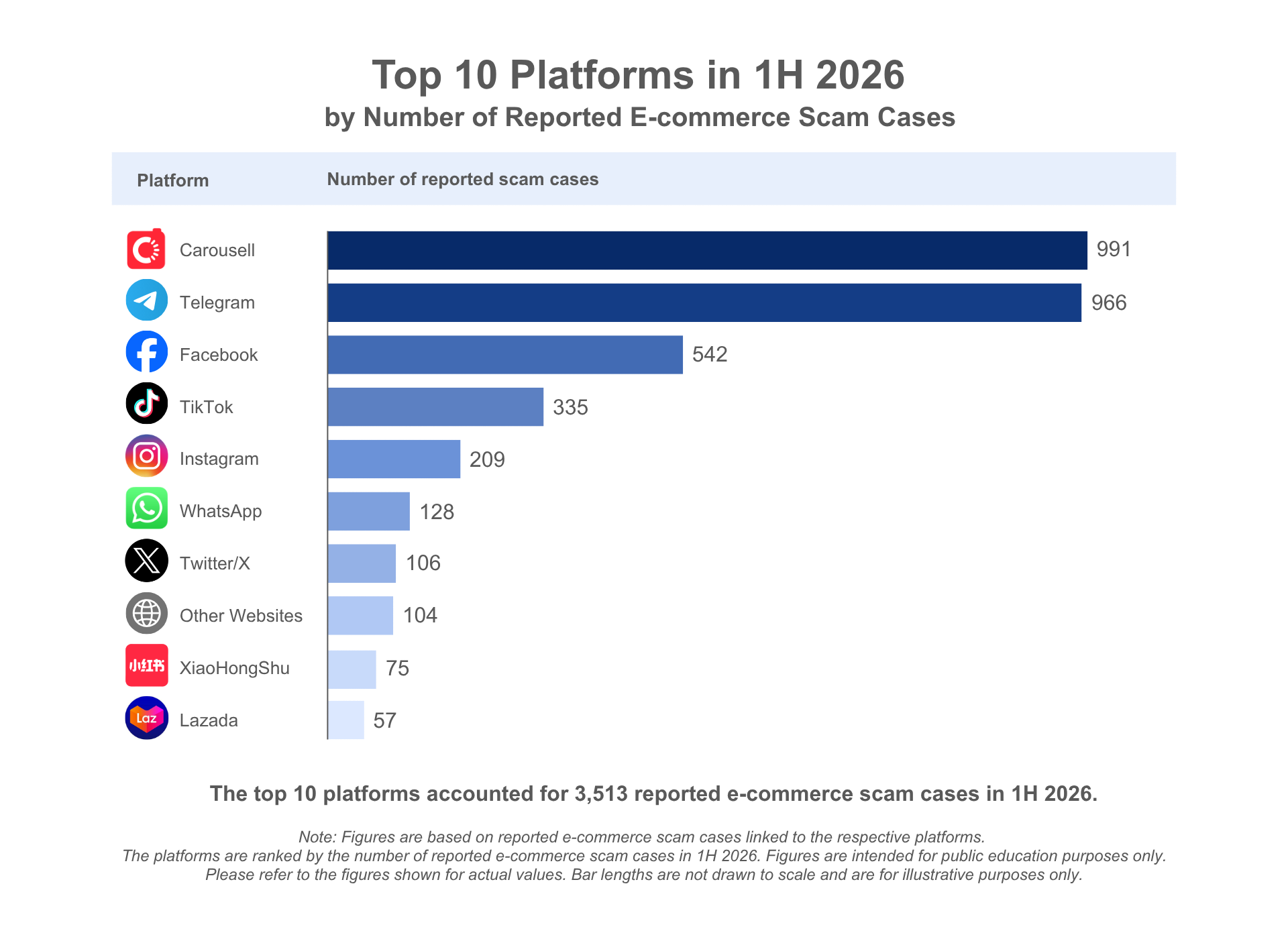
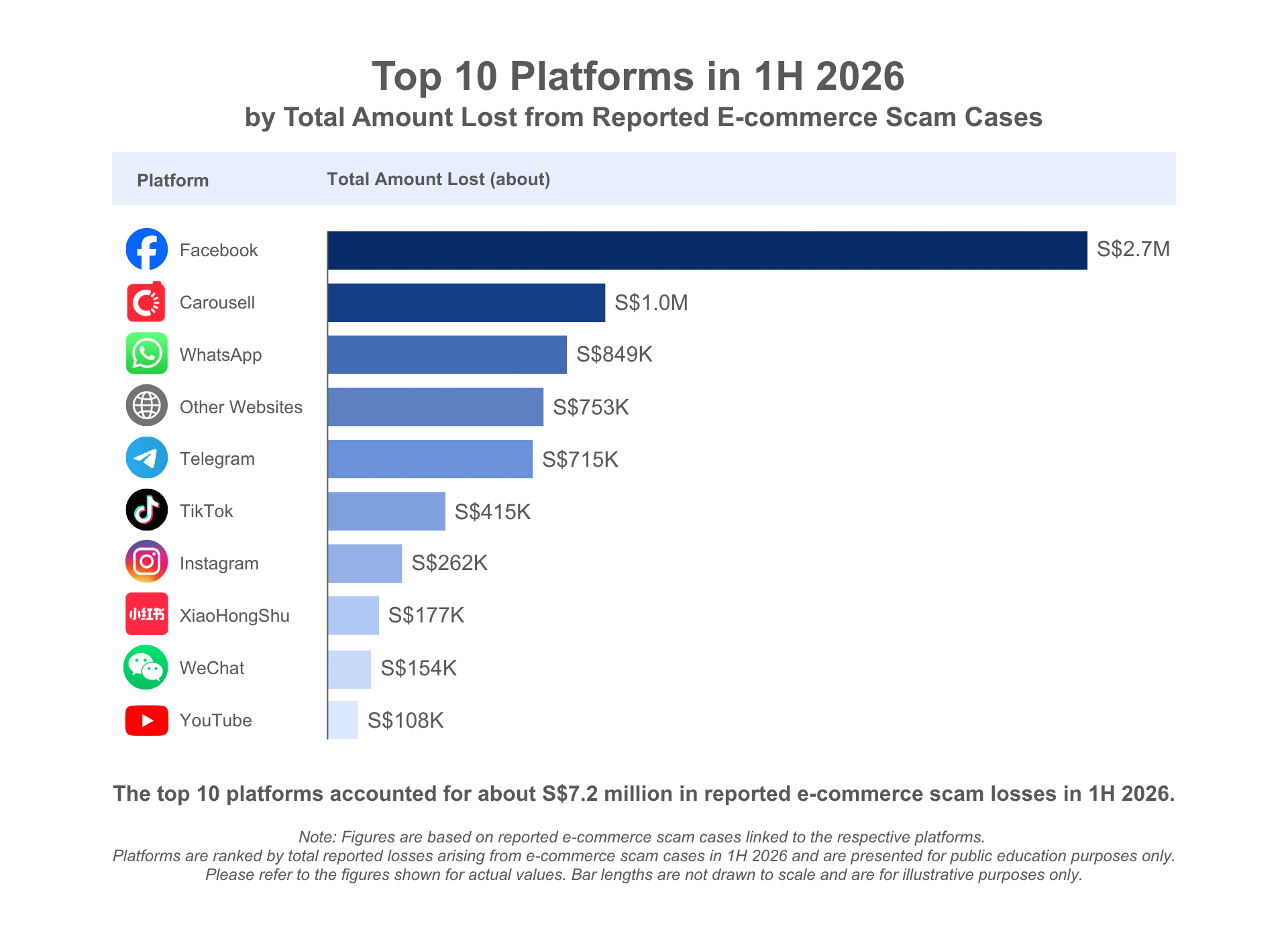
Facebook recorded the highest aggregate loss at about S$2.7 million and Carousell saw the highest number of cases, with about S$1.0 million lost. WhatsApp and other websites also saw relatively high losses despite lower case volumes.
Staying safe
To better protect themselves from e-commerce scams, consumers should consider transacting on e-commerce platforms which feature the following: (a) user verification measures that verify users against government-issued records, (b) secure in-platform payment mechanisms that release funds only after delivery is confirmed, and (c) proactive systems that detect and remove suspicious accounts, listings and activities. These measures provide consumers with greater assurance when transacting online and reduce opportunities for scammers to exploit online marketplaces.
In addition to upstream measures, platforms are required to remove malicious content and accounts promptly. Enforcement operations have also been scaled-up, resulting in the disruption of tens of thousands of scam-related mobile lines, online accounts and websites in 2025. Together, these platform-level obligations, regulatory requirements and enforcement measures enhanced consumer protection and markedly reduce the pathways scammers can use to reach and exploit potential victims.
For more information on how to stay safe while transacting online visit this page.